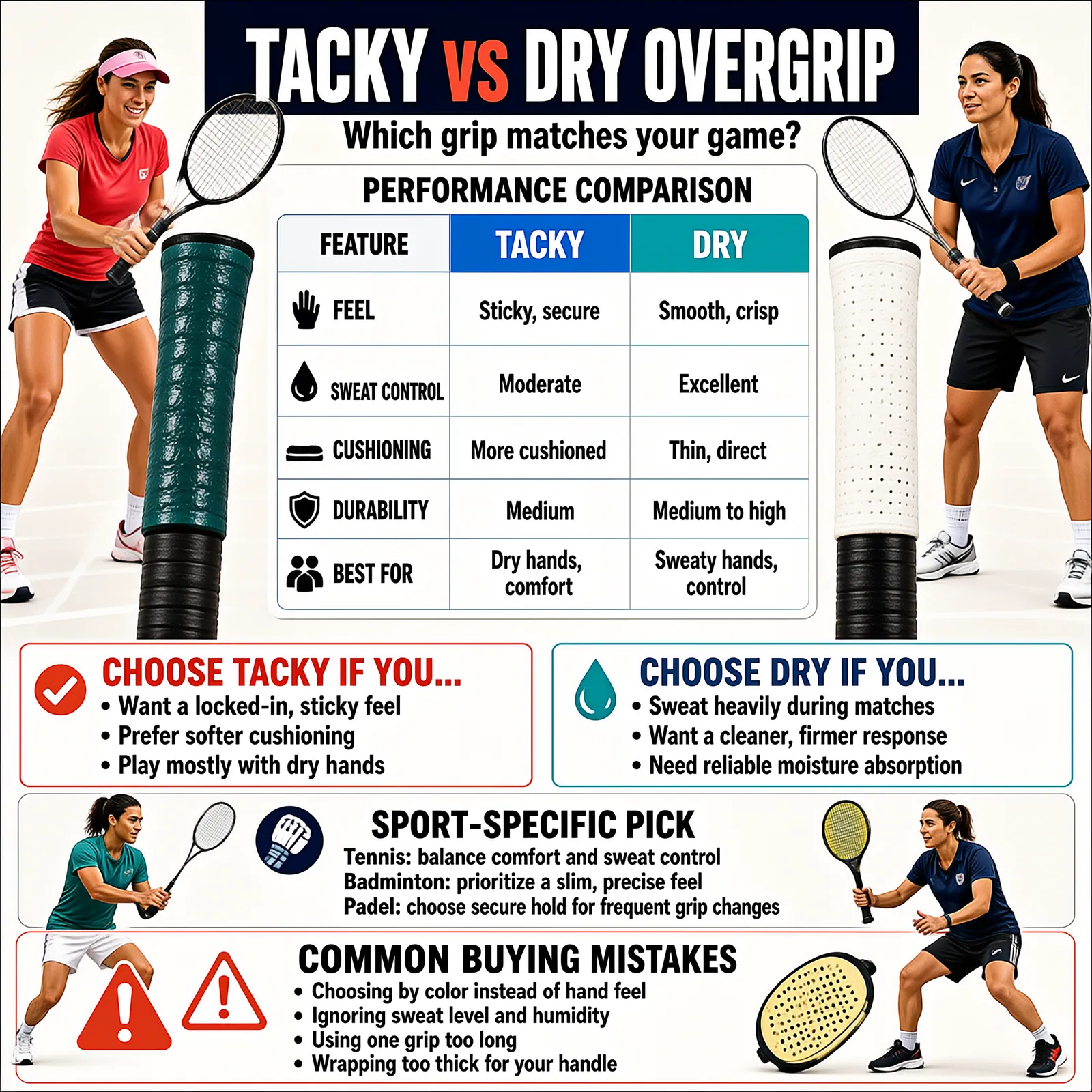
Overgrip replacement frequency depends on the actual wrap, installation and use. Start with an inspection record: what changed, why the wrap was removed and which model was fitted next. A tacky or dry label alone does not establish a fixed number of hours.
Record why an installed wrap is replaced before estimating future consumption.
This guide focuses on consumption, cost and repeat ordering. Use the materials guide to identify the surface and the sweat guide to evaluate handling conditions. Here, turn observations for an acceptable model into a practical replenishment record.
Replacement and reorder takeaways
- Record the date, use and reason whenever an installed wrap is replaced.
- Calculate cost from your own quotation and replacement records.
- Confirm the installed handle fit before comparing consumption.
- Keep model and condition changes separate from routine replacement.
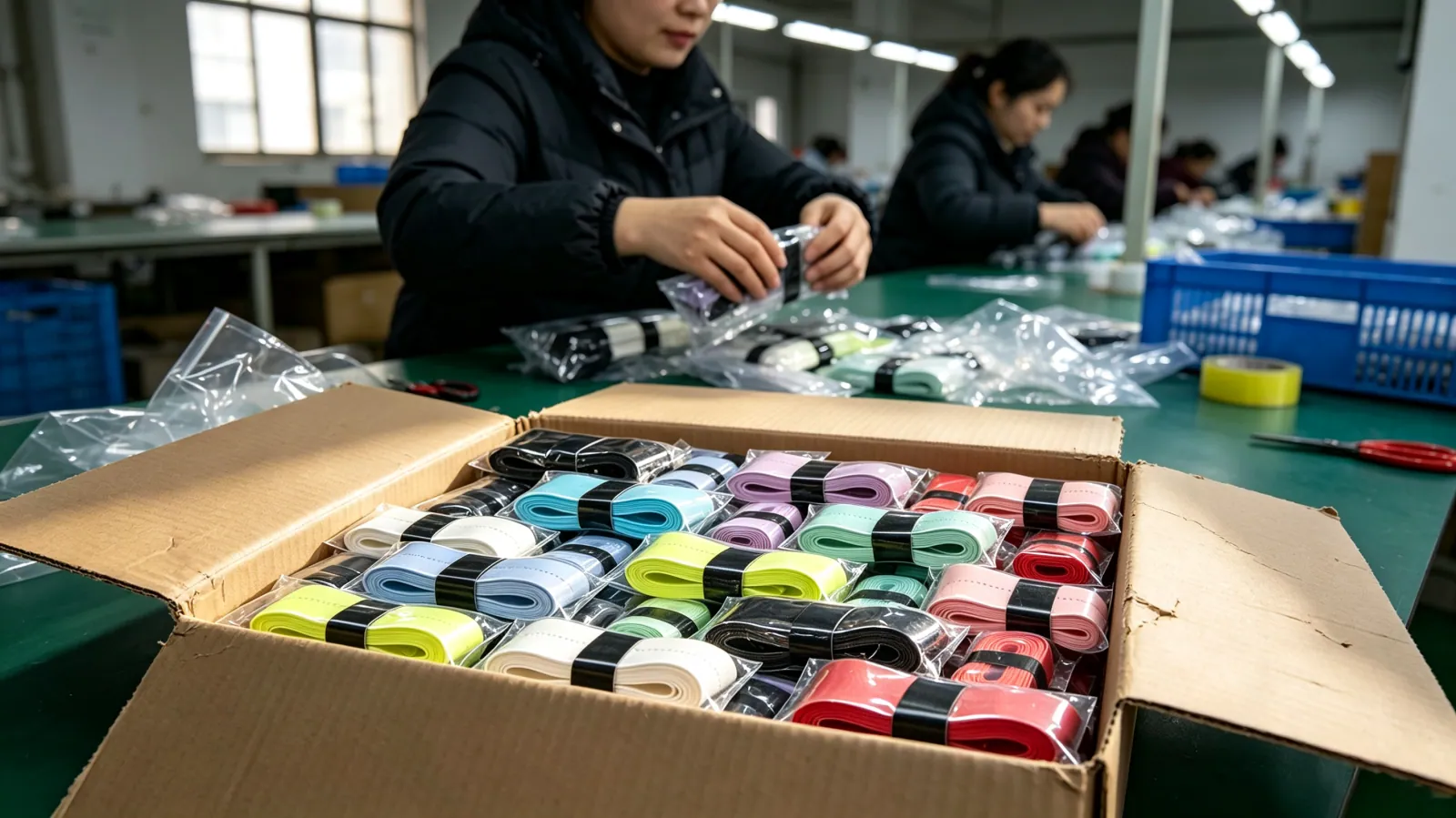
- Plan repeat orders using the confirmed supplied unit and packing format.
Decide What Triggers Replacement
Inspect the wrap for visible damage, lifting edges or a handling change that makes it unsuitable for the intended use. Record the reason and follow the selected product’s care guidance rather than waiting for an arbitrary lifetime limit.
A fresh sample and a worn installed wrap are different references. Before concluding that a material is unsuitable, check whether the issue concerns wear, fixation or a change in the player’s preferred handle size.
There is no documented lifetime ratio in this guide. Do not assume tacky wraps require replacement twice as often or that a particular session duration guarantees value. Establish the pattern from your own records for the actual model.
Record the Installed Reference Before Starting a Cycle
Label the model, variant and installation date. Include the base grip reference, covered length, overlap and finishing method so a later replacement can be compared with the same setup.
Note how the player describes the initial feel without converting it into a friction measurement. If the surface choice itself is still undecided, use the linked materials guide before treating the sample as the reference for repeat supply.
Record subsequent changes as observations. A field record can show when a wrap became unacceptable for that user, but it does not justify an unmeasured percentage advantage or a fixed market-wide service life.
Use a Replacement Record Instead of a Lifetime Ranking
The table separates information that belongs in every replacement record. Complete it for each selected sample; do not fill missing observations with typical-life estimates from another product or a different player group.
| Replacement record | Installed reference | Follow-up record |
|---|---|---|
| Model and variant | Record the selected SKU | Record any change |
| Installation | Base grip, overlap and end treatment | Keep the method comparable |
| Use record | Record known use information | Mark estimates as assumptions |
| Removal reason | Photograph and describe the change | Separate wear from installation changes |
| Conditions | Record the actual setting | Note relevant differences |
| Supplied unit | Confirm strip, roll or pack | Use the same cost basis |
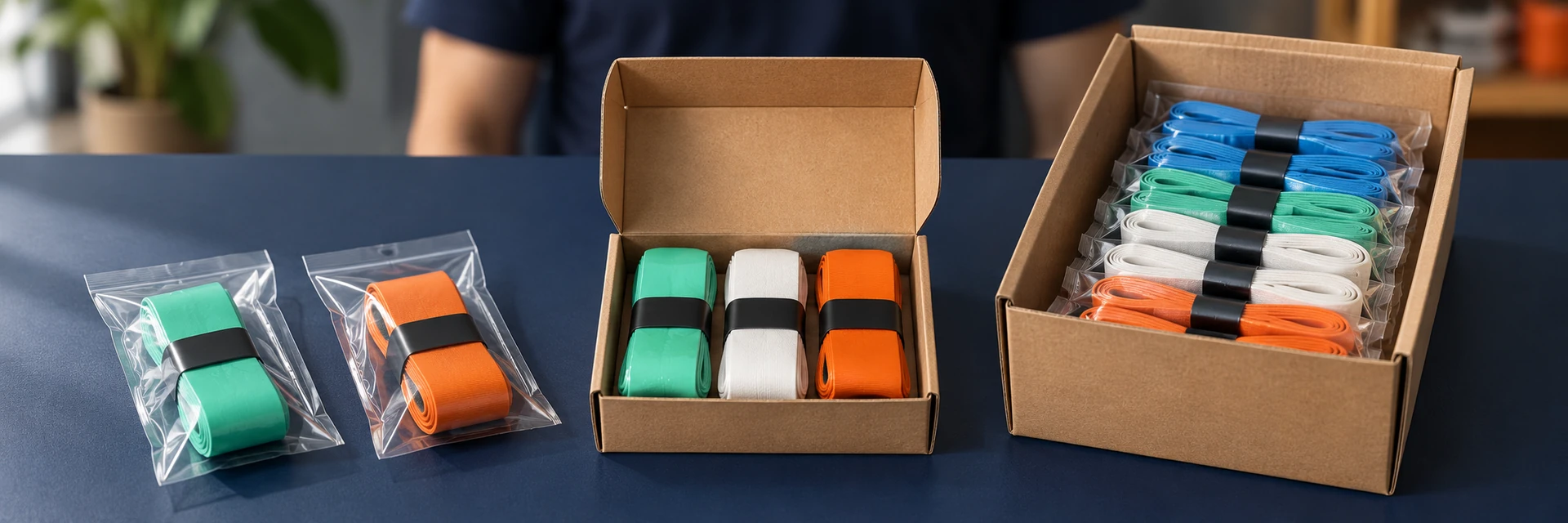
Keep purchase quantity distinct from installed consumption. A strip, roll, retail pack and carton are different units, and a wrap removed during sample adjustment should be distinguished from one replaced after normal use.
Review the record before expanding the order. If an installation problem caused the replacement, correct that reference first instead of treating the event as proof that the material has a shorter life.
A replacement record is a planning input, not a universal lifetime guarantee.
Track Use Conditions Without Turning Them into a Rule
Tennis and Padel: Repeated Installation Reference
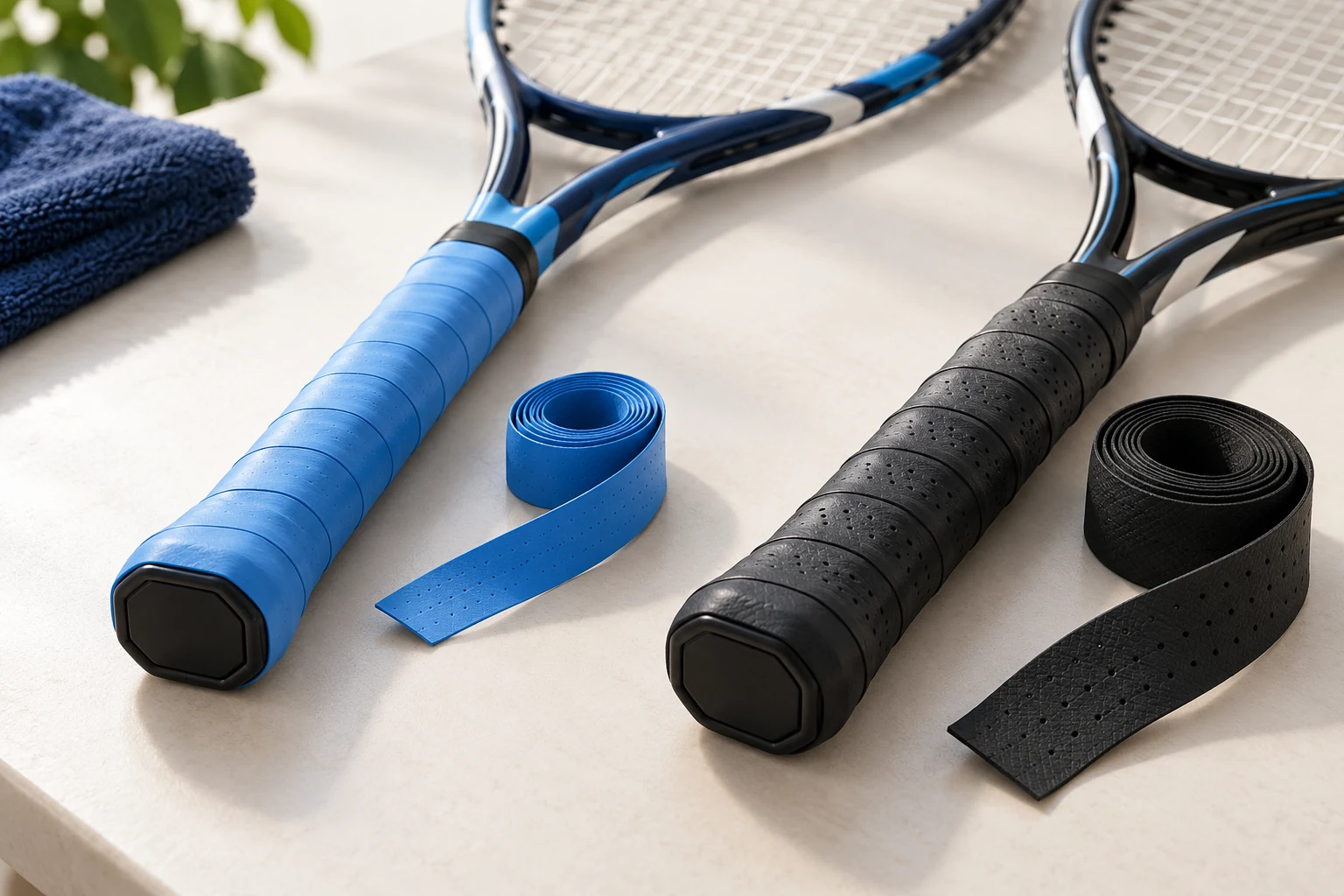
Record the handle and base-grip reference used when a tennis or padel wrap is replaced. A different overlap or base layer can change the installed size and makes the consumption record less comparable.
For a club’s repeated installations, keep the selected strip length and end treatment consistent. Note any change of model or equipment separately so normal replenishment is not confused with a product-development trial.
Badminton and Pickleball: Supplied Format
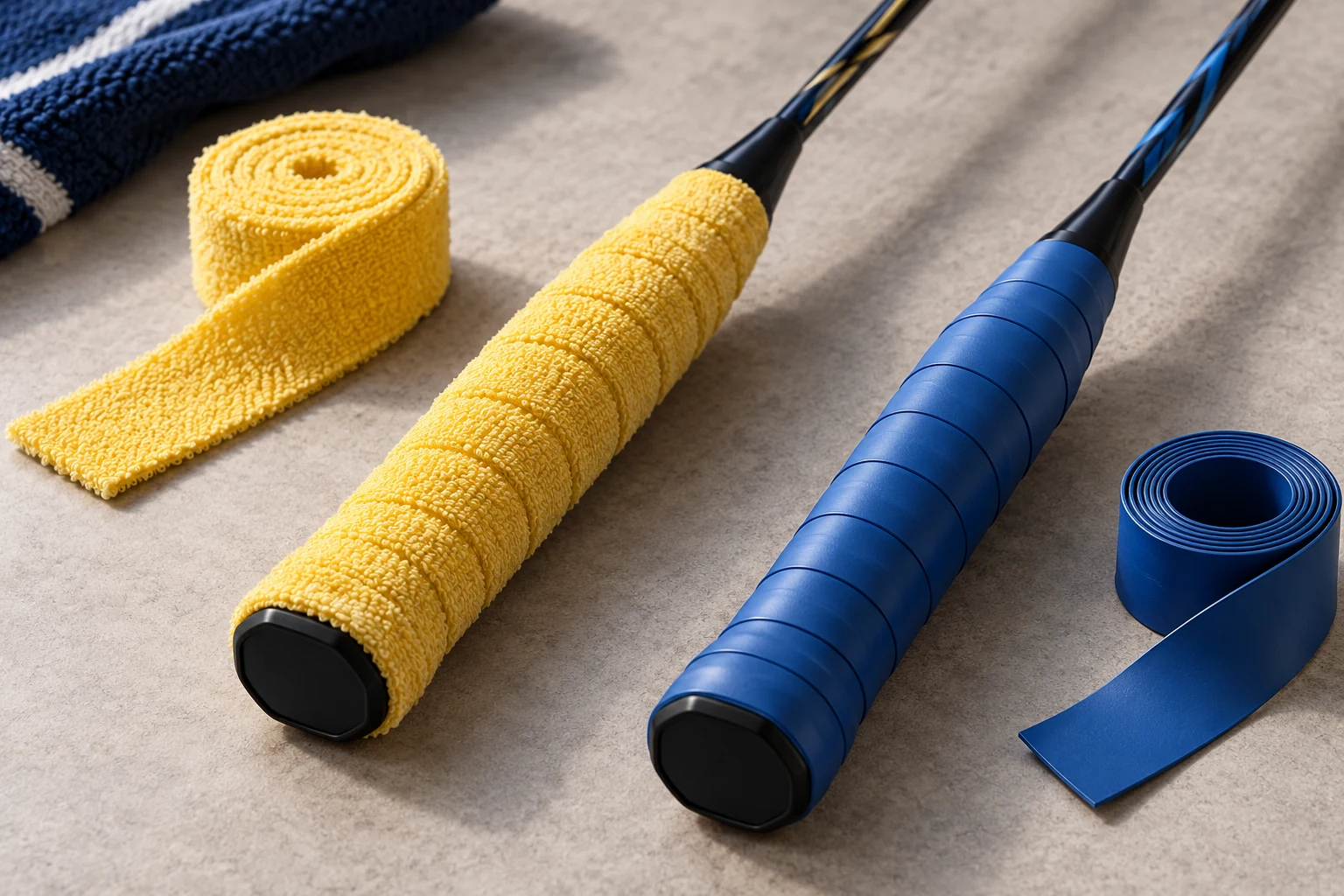
For badminton and pickleball, identify whether the order is supplied as individual wraps or a roll. Record how the format is used on the actual handle rather than comparing the price of a roll with the price of one strip.
If a sample requires a change in overlap, covered length or finishing, approve the revised installation before using its consumption figures for the next order. Do not assign a universal handle-size change from the listed thickness alone.
Sweat and Climate: Record the Context
Record the relevant use conditions beside the replacement reason. If perspiration is the main unresolved question, use the linked sweat-evaluation guide and select an acceptable sample before forecasting routine replacement.
Do not prescribe multiple outer wraps as a universal solution. Confirm the intended layer arrangement and installed dimensions, then keep that reference consistent for the records used in your purchasing calculation.
No fixed replacement interval is assigned to a humidity threshold. Compare actual observations for the model and intended use, and mark any forecast made without sufficient records as a planning assumption.
Avoid Comparing Orders on Different Assumptions
Mistake 1: Using Price Without a Supplied Unit
A low quotation per roll cannot be compared directly with a quotation per individual strip. Confirm supplied dimensions, pack quantity and relevant costs before comparing offers or estimating how many handles can be wrapped.
Keep sample selection and routine repeat supply separate in the records. A trial with several alternatives may generate extra installations that should not be used as the normal consumption rate for a single approved model.
Mistake 2: Ignoring Installation and Handle Fit
Measure the installed handle using a repeatable reference if final size matters. Listed thickness alone does not establish a fixed circumference increase, because overlap, tension and supporting layers also affect the result.
Record the approved installation method and final fit before approving a reorder. If a player requests a different build-up, treat it as a change to the reference rather than evidence that the previous wrap failed.
Mistake 3: Treating Trial Observations as a Guarantee
A replacement record supports planning for the uses observed; it does not establish a performance guarantee for all players. Keep conditions, model changes and the reason for removal visible in the record.
If a measured property is required, agree the test method and supporting records with the supplier. This article does not assert a particular inspection sampling rate, laboratory dataset or guaranteed wear interval.
Review sample feedback before committing to an order. Keep any estimate of future use separate from observed consumption and revise the plan when the confirmed specification or customer requirements change.
Record Useful Life Without Claiming a Universal Duration
Use your own definition of acceptable handling and note when the wrap no longer meets it. Record elapsed use only when it is known; a calendar date alone does not establish the number of hours a product was used.
Do not assume a wear mechanism from the surface label. Photograph relevant changes and request material-specific guidance where needed. A replacement decision can be practical without being presented as a laboratory conclusion.
No simulated-play test dataset or fixed tacky-versus-dry lifetime is claimed here. Keep the actual observation, installation and removal reason together; ask for reviewable evidence before relying on quantified performance in purchasing or marketing.
Calculate Cost from Your Own Purchase and Use Records
Choose a consistent calculation: cost per installed wrap, or cost per recorded unit of use where that information is available. Use the actual quotation and agreed supplied unit, not a universal price advantage assigned to a material label.
For cost per installed wrap, divide the relevant purchased quantity cost by the actual usable installations. For cost per recorded hour, use a comparable cost basis and the recorded hours; identify assumptions and do not divide by an unobserved lifetime estimate.
There is no supplier-price benchmark in this guide. Compare like-for-like quotations including the relevant packing and delivery scope, then use your own consumption record. The following fields make the calculation reviewable rather than implying that one surface is always cheaper.
- Model and variant: connect each quotation to the approved installation reference.
- Supplied unit: distinguish a strip, roll, retail pack and carton.
- Observed use: separate recorded consumption from a forecast.
- Order scope: confirm quantity, packaging, delivery and applicable minimums.
Questions About Replacement, Cost and Repeat Supply
What is this guide intended to help me decide?
It helps record replacement reasons, compare a consistent cost basis and prepare a repeat-order brief. Material selection and sweat evaluation are addressed in the related guides.
Does a tacky label establish a shorter replacement cycle?
No. Compare records for the selected models and conditions. Do not assume a fixed lifetime ratio from the tacky or dry label.
How long should an overgrip remain installed?
Use the selected product’s guidance and inspect its installed condition. No universal number of hours or sessions is established here; replace an unsuitable wrap and record the reason.
Does changing thickness affect the reorder reference?
Yes. A different supplied variant or installation can change the final fit. Confirm the new reference on the intended handle before treating it as the same repeat order.
Which dimensions should a reorder brief contain?
Include the approved material or model, exact variant, length, width, thickness where applicable, and supplied unit. Confirm rather than infer any missing catalogue field.
Are dry overgrips always cheaper to use?
No general price or lifetime advantage is asserted. Compare your own like-for-like quotation and consumption record, keeping assumptions visible.
What belongs in a repeat-order request?
Send the approved model and installation reference, quantity, supplied unit, colors, packing and destination. State whether anything has changed since the last approved brief.
Standard products start at 100 units with up to two colors; custom projects currently start at 1,000 units. Confirm applicable minimums, model combinations, per-color quantities, supplied units and order timing in the quotation. Confirm sample selection, quantity, charges, shipping and preparation timing before dispatch.
Confirm the supplied unit, approved variant and order scope before comparing repeat-order costs.