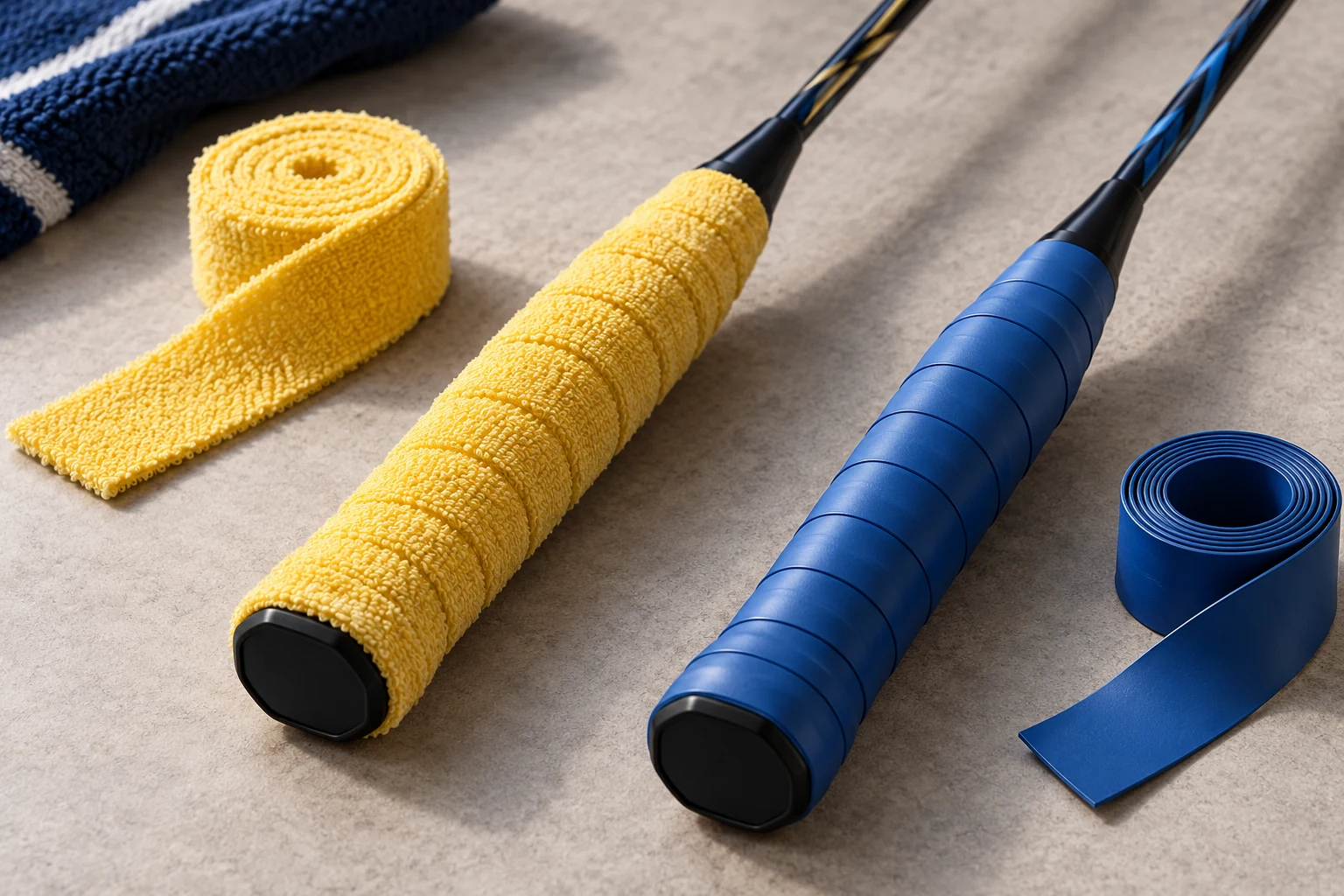
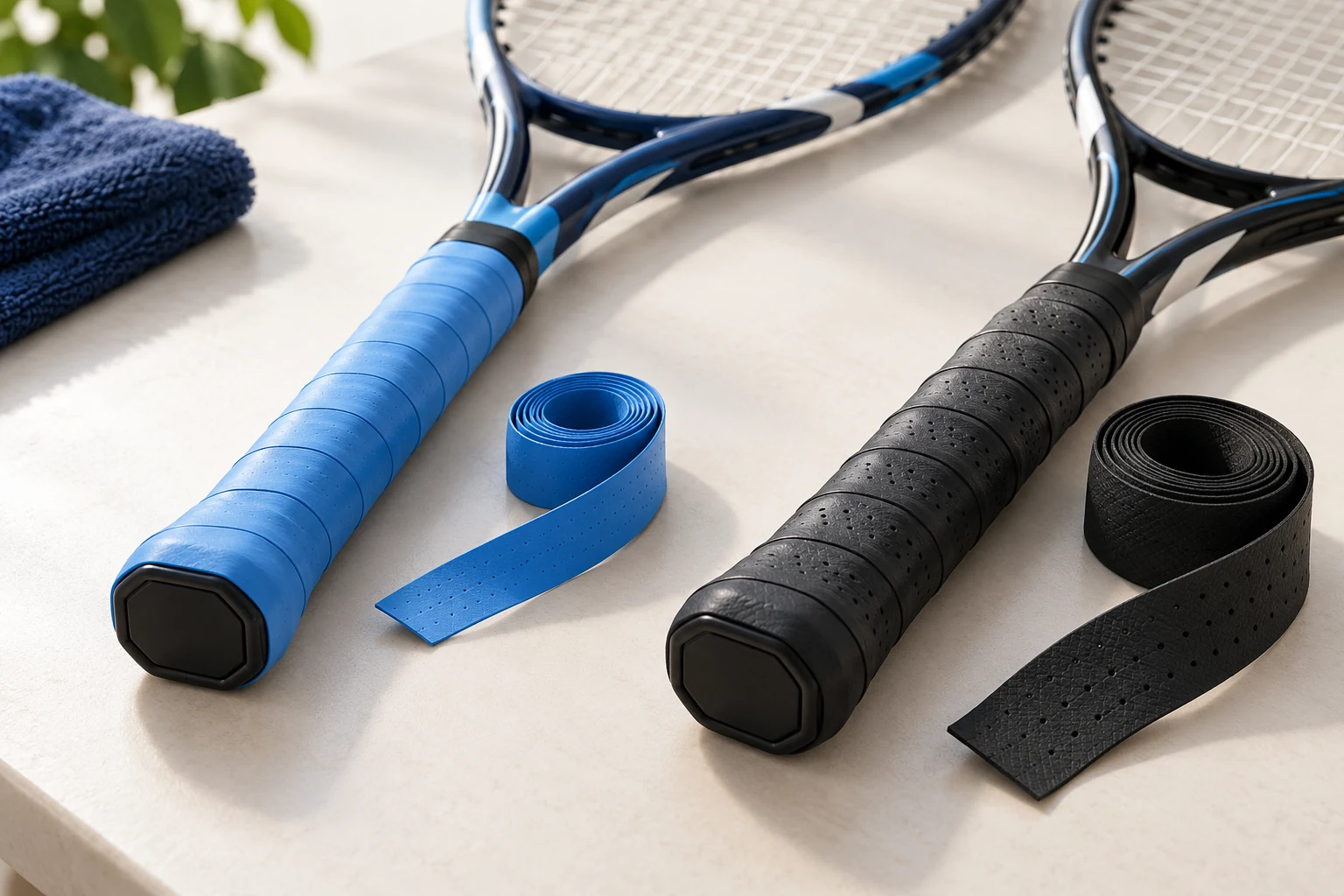
An overgrip is a thin outer wrap fitted over an existing base grip. A replacement grip replaces that base layer on the racket handle. Choose an overgrip to refresh surface feel; choose a replacement grip when the base layer needs replacing or you want a different foundation. Both layers affect the finished handle size.
The distinction matters when buying one grip for a racket or building a private-label accessory range. Two strips can look similar in a product photo yet serve different jobs. This guide compares their position, dimensions, feel and sample requirements, using current Tackavo models to make the choices concrete.
What is the difference between an overgrip and a replacement grip?
An overgrip changes the surface your hand touches while retaining the base grip underneath. A replacement grip establishes that base layer. In a conventional two-layer setup, the order is the handle, replacement grip, then overgrip. HEAD's overgrip installation guide describes removing the old overgrip while leaving the grip below in place.
| Decision | Overgrip | Replacement grip |
|---|---|---|
| Position | Outer wrap over the existing base grip | Base layer fitted around the handle |
| Reason to choose | Refresh surface texture, tack level or outer feel | Replace a worn base or change the foundation's dimensions and feel |
| Current Tackavo examples | Flat OG models commonly list 0.4–0.8 mm; specific families list individual thickness options | Current RG entries span 1.10–1.90 mm |
| Installed size | Adds a layer to an existing grip | Changes the base before any optional outer wrap |
| Surface choices | Tacky, mild-tack, dry, soft or raised-ridge options | Soft, comfort, firm or mild-tack model families |
| Sample to evaluate | Wrap on the intended base grip | Fit to the intended handle, then add the chosen overgrip if required |
Thickness ranges above describe the current catalogue, not universal definitions for all brands. A product's role is determined by its construction and intended installation. Also check the backing, taper and finishing method: not every grip uses the same adhesive arrangement.
Which grip should you change?
If the outer surface is worn but the base is sound
Start with an overgrip. Inspect the base for movement, flattened areas and an uneven seam before wrapping. If its fit is still suitable, compare an outer surface that addresses the change you want: a tacky wrap, a less sticky dry feel or a mild-tack alternative. You can browse those families on the custom overgrips page.
If the base grip is damaged or the foundation feels wrong
Review a replacement grip. A new outer wrap can cover a base grip, but it cannot establish whether a damaged or poorly fitted base is acceptable. Check the handle and base first, then decide whether the final setup will use the base alone or both layers. Use the replacement-grip specification comparison to shortlist by width, length, thickness and feel.
If you want a different handle size
Decide whether to change the base, the outer wrap or both. Adding more material usually changes the grip circumference, but the result also depends on overlap, compression and tension. For a brand launching several racket models, keep the handle reference and wrapping method fixed when approving grip variants.
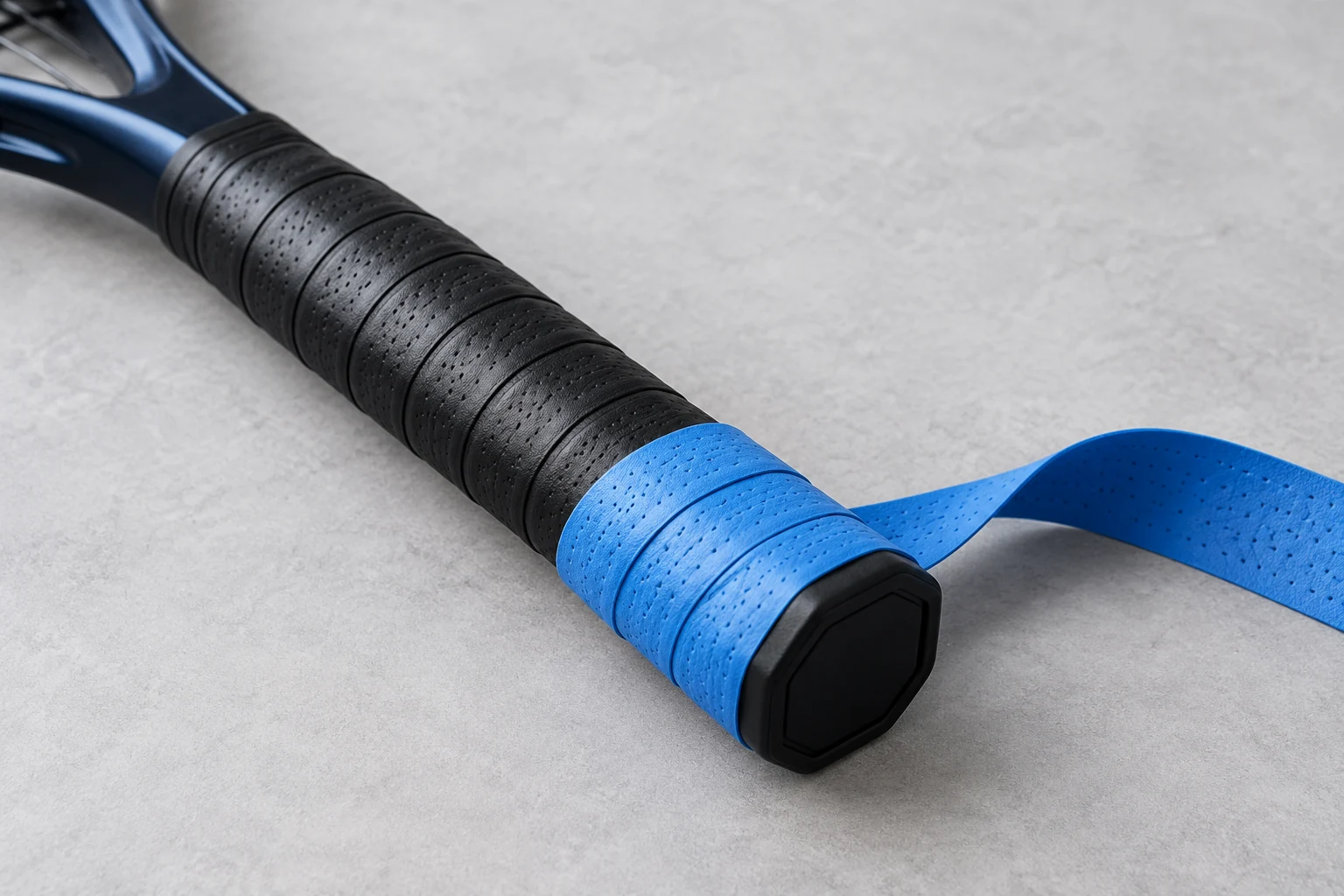
How do thickness, width and overlap affect the finished handle?
Flat-strip thickness is not the same measurement as finished handle circumference. A catalogue dimension describes the supplied material. The installed result includes the original handle, any base layer, the outer wrap and overlap between adjacent turns. HEAD also notes that changing overgrip overlap changes handle build-up in its padel overgrip guide.
Compare width and length together. A wider strip changes the number and angle of turns; length determines whether the chosen wrapping pattern covers the handle. A 1000 mm strip and a 1200 mm strip are not automatically interchangeable on every handle, even if their thicknesses are similar. Confirm coverage on the actual racket or paddle rather than choosing from a sport label alone.
Raised-ridge models need a separate fit check. The current OG-K01 perforated keel overgrip lists approximately 1100 × 25 × 0.7 mm and has a raised ridge. The nominal thickness alone does not describe every part of that installed profile. Compare the ridge location, seam and handle circumference with a flat wrap.
Which Tackavo models make useful comparison samples?
These combinations help isolate a purchasing decision. They are proposed evaluation sets, not a tested ranking of grip quality or a promise that one model suits every player.
| Model | Listed dimensions | Comparison purpose |
|---|---|---|
| OG-T01 | 1200 × 25–28 × 0.4–0.8 mm | Soft tacky outer-wrap reference; specify the exact sample thickness |
| OG-D01 | 1200 × 25–28 × 0.4–0.8 mm | Dry outer-wrap comparison; match dimensions to the tacky sample |
| RG-S01 | 1000 × 30 × 1.20 mm | Soft base-grip reference |
| RG-S02 | 1000 × 30 × 1.50 mm | Thicker option within the soft base-grip family |
| RG-F01 | 1100 × 25 × 1.80 mm | Firm base-grip reference; evaluate its own width and construction |
For a surface-feel comparison, request OG-T01 and OG-D01 at the same approved thickness and width, fitted over the same base. For a base-thickness comparison, RG-S01 and RG-S02 have the same listed length and width with different thicknesses. They still need physical evaluation; matching catalogue fields does not establish identical compression or surface behavior.
How should you evaluate grip samples?
A useful sample review records the setup as well as the opinion. “Too thick” means little if each evaluator used a different base grip or overlap. Use the following repeatable method for internal selection, then collect player feedback under conditions relevant to your customers.
- Label each sample. Record SKU, actual variant, width, length, thickness, color and surface. Distinguish a requested custom dimension from the catalogue range.
- Prepare a consistent handle reference. For an overgrip comparison, use the same base specification. For replacement grips, record the bare-handle size and condition.
- Control the wrapping method. Keep overlap and tension consistent. Photograph the start, seam and finished end so the chosen method can be repeated.
- Record installed observations. Check coverage, circumference at the same handle position, edge feel, hand repositioning and whether the logo remains visible.
- Agree the production reference. Retain the approved sample, specification and artwork version. State which differences are acceptable before repeat orders.
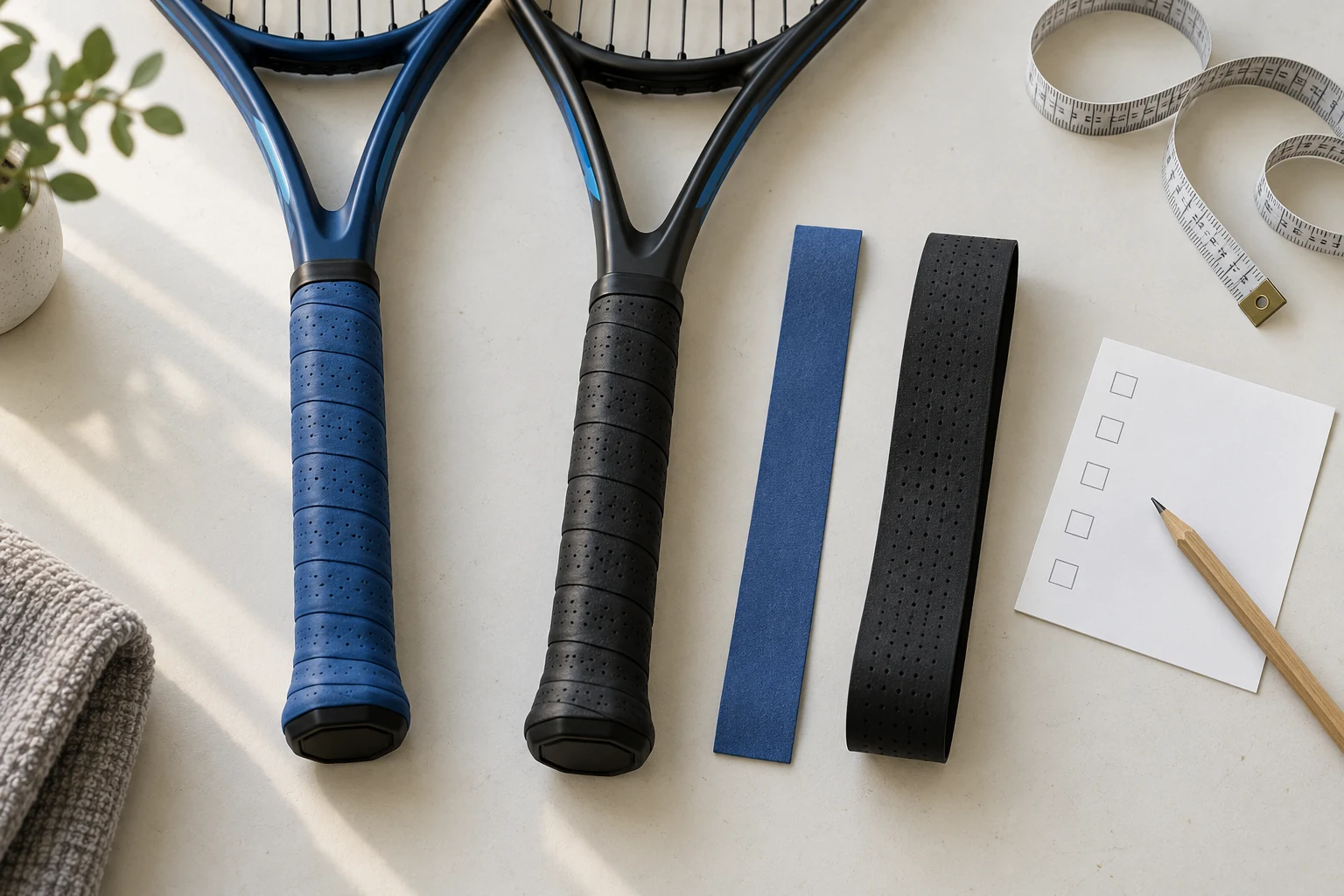
What should an OEM or wholesale grip brief include?
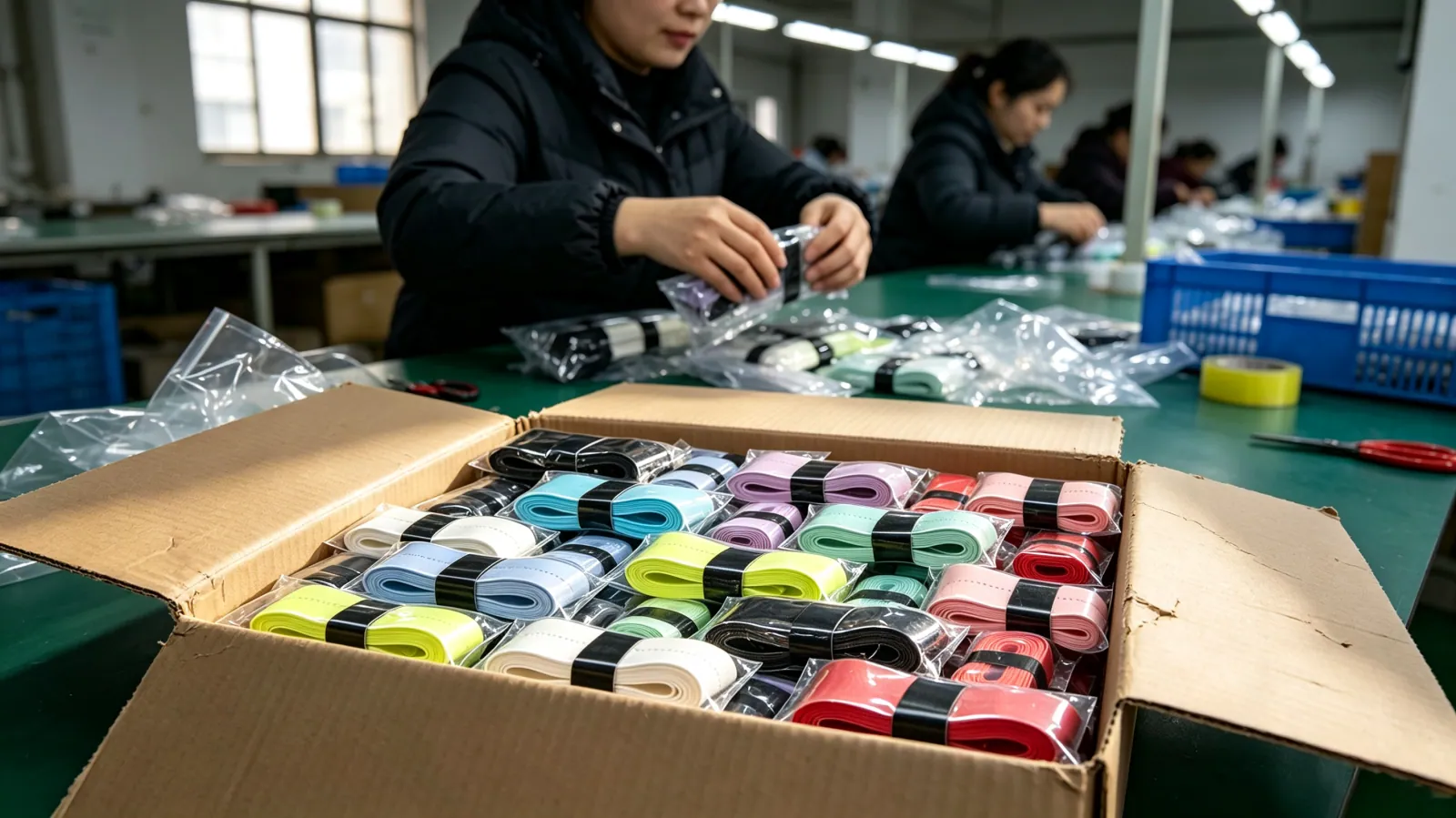
Identify the layer first: overgrip, replacement grip or a coordinated two-layer set. Then provide the selected models, exact dimensions, target feel, intended sport and handle reference. Include quantity by model and color, logo artwork, preferred branding position, pieces per pack and delivery destination.
Tackavo's current standard starting minimum is 100 units for standard products, with up to two colors and 1,000 pcs for custom products or logo programs. Confirm how those quantities apply to model, color and packaging variants in the quotation. Sample selection, availability, quantity, charges, shipping and preparation timing are confirmed before dispatch.
Branding should be approved on the installed grip and the pack. A logo that looks correct on a flat strip can be hidden by the next turn. Ask which method is suitable for the chosen material, then approve the wrapped position and packed sample together. See the grip customization options when preparing artwork.
Common questions about overgrips and replacement grips
Can I use an overgrip without a replacement grip?
For a conventional two-layer setup, an overgrip is intended to cover the base grip. Some players or specialist setups use different layer arrangements, but that changes fit and feel. If direct-to-handle use is your brief, state it explicitly and confirm suitability with the selected sample.
Can a replacement grip be used without an overgrip?
A replacement grip can be the hand-contact layer if that is the intended setup. Evaluate its surface and finished size in that configuration. An added overgrip changes both the contact surface and the total build-up.
Is a thicker replacement grip always softer?
No. Thickness and feel are separate specifications. For example, the current RG range includes firm and soft models with a listed 1.80 mm thickness. Material construction, surface and compression still need to be compared.
How often should each layer be replaced?
There is no fixed service-life figure for every player or model. Inspect the surface and installed condition, and replace the relevant layer when it no longer provides the fit or feel you require. Do not present a universal number of playing hours without product-specific evidence.
Does a grip's sport label guarantee fit?
No. Tennis, badminton, padel and pickleball handles vary. Check length, width, thickness and actual wrapping coverage against your target handle. A reference racket or dimensioned handle is more useful than the sport name alone.
Sources and specification notes
General installation references: HEAD: changing a tennis overgrip and HEAD: placing a padel overgrip. Tackavo model dimensions come from the linked product specifications reviewed for this guide. Confirm the selected variant with your quotation. Illustrations are AI-generated generic examples and do not establish a model's construction, dimensions or performance.